H2O Reclaimed Services
Dissolved Air Floatation System
About Dissolved Air Floatation System
Dissolved Air Floatation(DAF) technology is a proven and effective method for treating various industrial wastewater streams, specifically targeting oils, greases, and suspended solids. It produces high-quality water that is safe for discharge into the sewer or reuse within your plant processes.
What is Dissolved Air Floatation System (DAF) ?
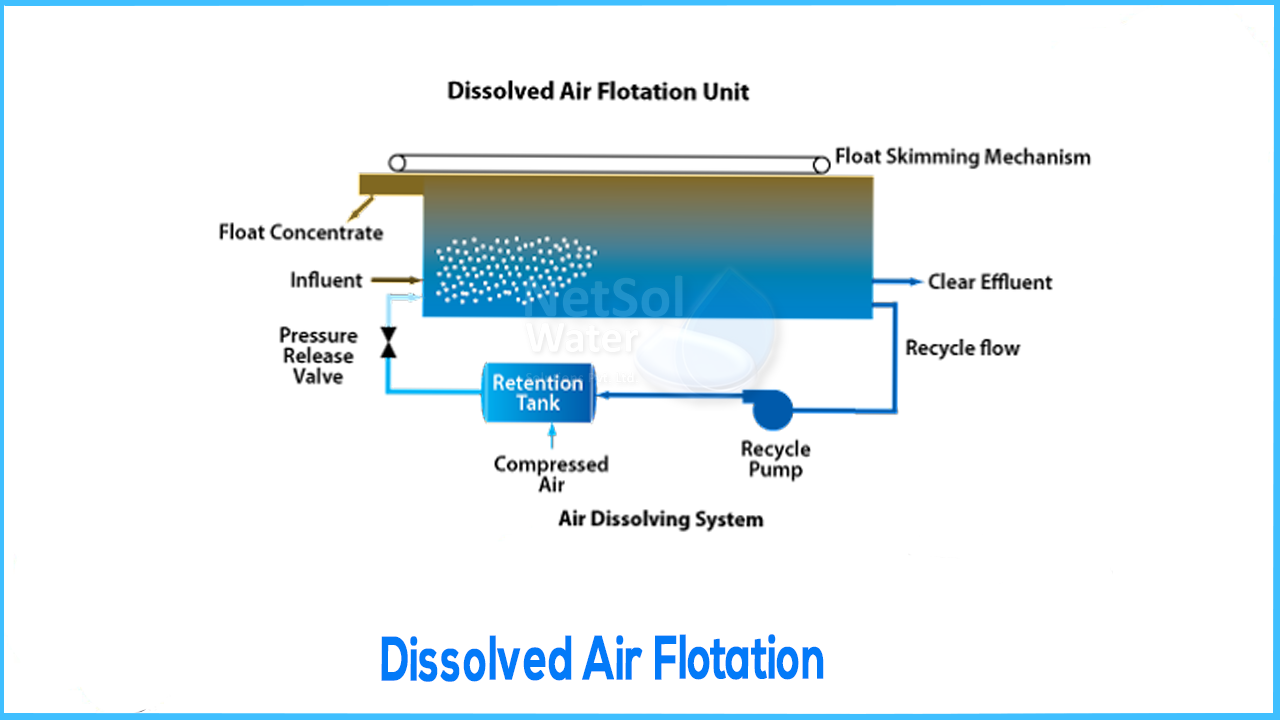
Dissolved air flotation is a water treatment process that clarifies wastewater by removal of suspended solids, oils, greases, BOD, COD, and metals. This is achieved by dissolving air in the wastewater under pressure and then releasing the air at atmospheric pressure in a flotation tank. The released air forms tiny bubbles which adhere to the suspended matter causing it to float to the surface of the water where it can then be removed by a skimming device, ready to dewater for proper disposal. To improve solids removal coagulant/flocculants are added to coax suspended solids and colloidal particles into clumping together.
What does a DAF system look like?
Through on-site visits, testing, and pilot studies, the unique requirements of a processing plant are identified, and a customized DAF system is designed accordingly. Typical DAF systems encompass coarse filtration, physical-chemical treatment, and sludge dewatering before discharge or reuse.
Coarse filtration removes lint, scale, sand, and other large objects from the waste stream using hydro cyclones or shaker screens. The hydro cyclone system, a centrifugal separator, is designed to extract high-density solids like sand and gravel from the waste stream. The shaker screen is a multi-stage filtration device that accommodates varying flow rates and separates both fine and coarse particles. Both filtration methods are utilized prior to the DAF.
Accurate pH control is crucial for any wastewater treatment system. Industrial wastewater dischargers and commercial laundries often need to adjust or neutralize pH levels. Discharge pH limits vary by region, and violating these limits can result in fines and environmental damage. Automated pH control typically involves a treatment tank with a mixer, an in-tank pH sensor, in-tank level control, metering pumps for acid and caustic injection, an automated drain valve or pump for the effluent, and a control panel.
Following coarse filtration and pH control, the waste stream moves through the DAF, where sludge is skimmed and transferred to sludge dewatering. A filter press then dewaters the liquid waste residuals, producing dry, solid waste for disposal. This solid waste can be separately disposed of in landfills, resulting in cleaner wastewater discharge. The filter press significantly reduces waste treatment and disposal hauling costs.
Where and Why DAF ?
Typically, DAF is used to clarify wastewater from food processing plants, industrial laundries, oil refineries, paper mills, metal finishing, and many other niche industries so water is suitable for reuse or discharge to sewer.
- Reduced Footprint
- Lower Compliance Costs
- High Efficiency
- High Quality Treated Water
- Increase Reuse Rates